
What You Need as a Parent (Not Just What Your Child Needs)

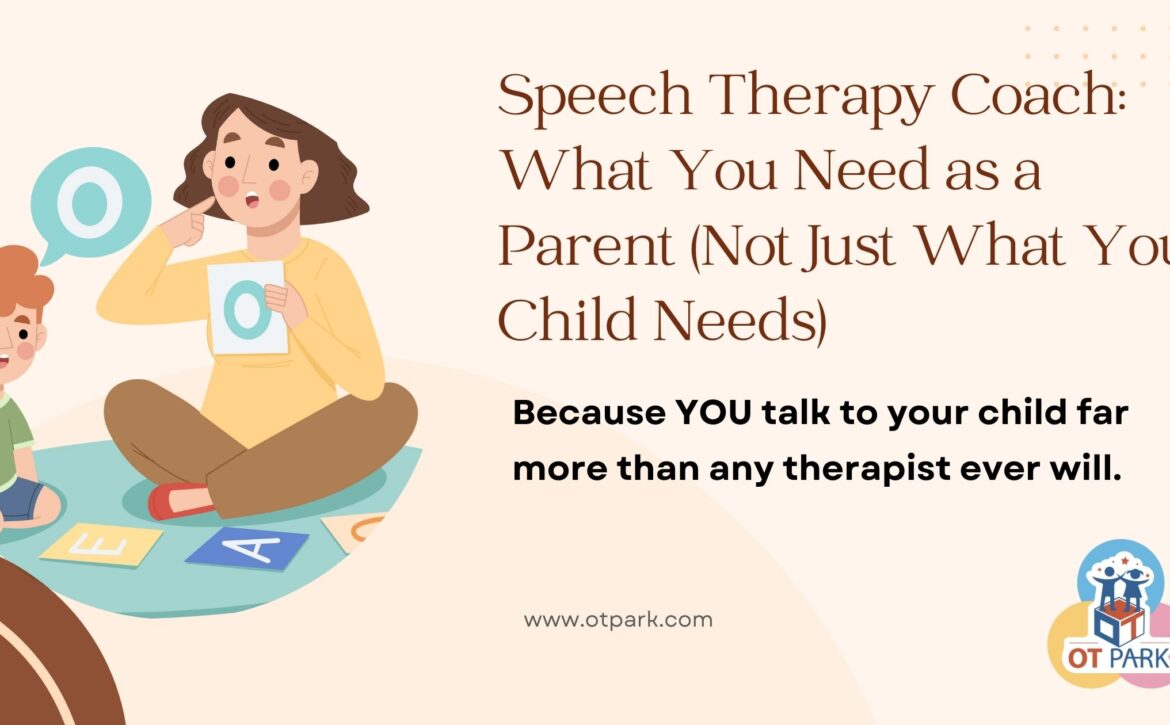
Speech Therapy Coaching: What You Need as a Parent (Not Just What Your Child Needs)

Because YOU talk to your child far more than any therapist ever will.

Most parents come to us saying:

“I tried telehealth… it didn’t work.”
“My child doesn’t pay attention to the screen.”
“I didn’t feel involved.”

We get it.
Traditional telehealth was never designed with parents in mind—it was designed to mimic in-person therapy through a screen. And that simply doesn’t work for most families.

But at OT Park, something different happens.

Families join our Speech Therapy Coach program—and suddenly, they’re saying:

✨ “I love this!”
✨ “This feels natural.”
✨ “I understand my child so much better now.”

Here’s why:

Our model isn’t built around the screen.
It’s built around YOU.

đź’› Why YOU Matter More Than Any Therapist

Let’s say this honestly…

A speech therapist sees your child 30–60 minutes a week.
YOU talk to your child all day, every day.

That means:

  • You are their biggest communication partner.
  • You are the one responding to their gestures, sounds, words, and behaviors.
  • You are the one supporting them through frustration, joy, play, routines, and everything in between.

So therapy shouldn’t revolve only around the child.
It should revolve around YOU—the parent.

When you learn communication strategies, your child gets hundreds of practice opportunities every single day.

That’s what truly drives progress.

🌟 What Is a Speech Therapy Coach?

A Speech Therapy Coach is a licensed SLP who focuses on:

  • Coaching PARENTS in real time
  • Helping you understand your child’s communication style
  • Teaching you simple strategies you can use immediately
  • Supporting your relationship, not complicating it
  • Guiding you through challenges like frustration, meltdowns, or unclear communication
  • Adjusting routines and interactions so your child feels successful

And yes—if your child needs oral-motor, feeding, or physical-speech work, we provide that too.
But for most families, true progress starts with the parent-child connection.

Why Telehealth Coaching Works So Well (When Done Right)

Most telehealth fails because it’s therapist-centered. Coaching works because it’s relationship-centered.

✔️ YOU learn how to talk TO your child

We teach you how to model words, expand language, interpret cues, and respond in the most supportive way.

✔️ YOU understand their behavior

Many “behavior problems” are really communication problems.
We help you decode them.

✔️ YOU build strategies into everyday life

Instead of once a week, your child gets practice during:

  • Meals
  • Bath time
  • Car rides
  • Playtime
  • Routines
  • Outings
  • Transitions

That’s hundreds of opportunities—naturally.

✔️ Your child feels safer with YOU

Children communicate best with someone they trust deeply.
That’s you—not us.

đź§  What About Kids Who Need Direct Therapy?

If your child needs:

  • Oral motor strengthening
  • Feeding therapy
  • Articulation drills
  • Physical speech movements

—we will absolutely provide direct treatment.

But even then…
Parent coaching is still a huge part of long-term success.

Because the therapist can teach a skill,
but you help your child use it in real life.

🤝 What a Speech Therapy Coaching Session Looks Like

1. You share what happened this week

Wins, struggles, confusing moments, or anything your child expressed.

2. We teach & model strategies and perform Speech Evalauations 

Simple, practical, doable—no overwhelm.

3. You try it with your child

We guide you with live feedback.

4. You learn how to support daily communication

Not homework. Not worksheets.
Real routines, real life.

5. We help YOU feel confident

Because when you feel confident, your child thrives.


Speech Therapy Coach Isn’t About Telehealth.

It’s About EMPOWERING YOU.

  • You are your child’s safest person.
  • Their favorite communicator.
  • Their everyday teacher.
  • Their voice model.
  • Their guide.
A Speech Therapy Coach doesn’t replace you. A coach supports you, strengthens you, and teaches you how to bring out the best in your child’s communication. This isn’t just therapy. This is family growth.

🌟 Ready to Feel More Confident?

At OT Park, we don’t just work with children—we partner with parents.

If you’re ready to:

✔️ Feel empowered
✔️ Understand your child deeply
✔️ Communicate better
✔️ Reduce frustration for both of you
✔️ Support speech naturally throughout the day

Then the Speech Therapy Coach model is exactly what your family needs.

workshop

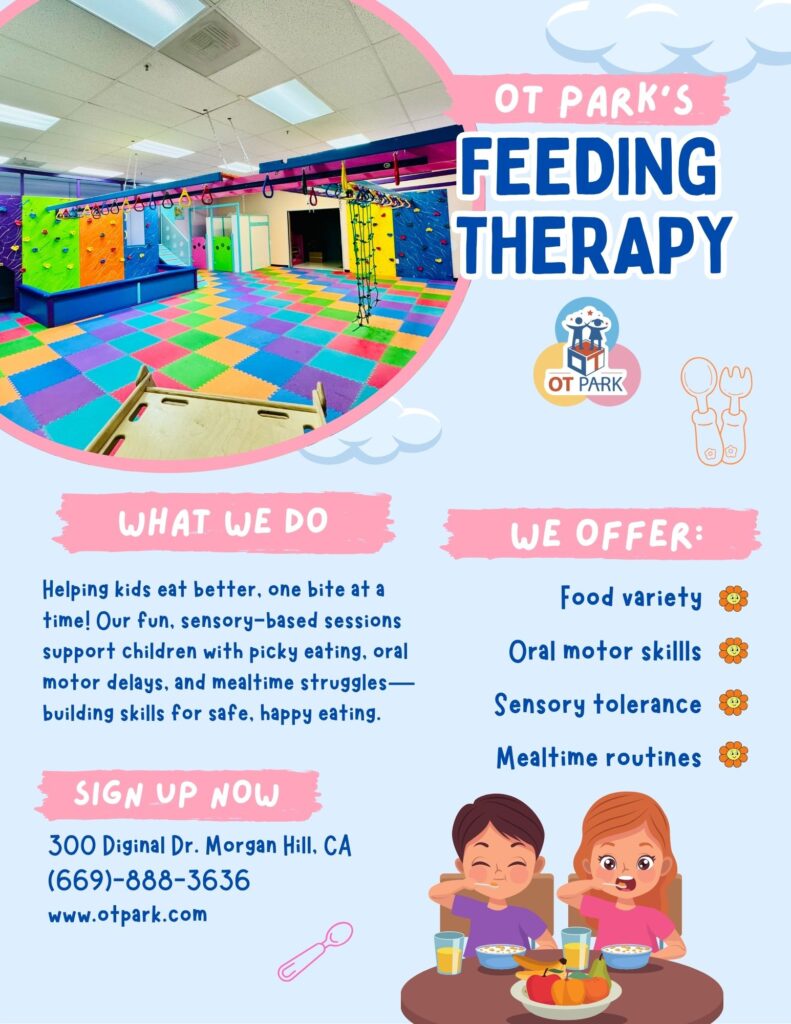
Feeding Therapy at OT Park: How We Can Help

Is your child an extremely picky eater? Do they gag, tantrum, or refuse to eat during meals? Do they have trouble swallowing, choke while eating, or frequently get sick with pneumonia? Has mealtime become a stressful event in your home?

If any of these sound familiar, your child may benefit from feeding therapy at OT Park with a trained occupational or speech therapist. Feeding difficulties can stem from various causes, including sensory processing challenges, such as those associated with sensory processing disorder or autism spectrum disorder, as well as motor difficulties often seen in conditions like cerebral palsy or neurological impairments. A feeding therapist can help make mealtimes less stressful and more enjoyable.

What Is Feeding Therapy?

Feeding therapy involves a trained occupational or speech therapist working with your child to help them learn to eat or eat more effectively. Sessions are typically held once or twice a week for one hour. At OT Park, we create an individualized approach that addresses the specific sensory and motor challenges your child faces in eating an age-appropriate meal.

How to Get Started

If you’re struggling with mealtimes and believe your child may need feeding therapy, the first step is to consult your pediatrician. They may refer you to a feeding therapist for a comprehensive evaluation.

The Feeding Therapy Evaluation

A feeding evaluation at OT Park includes a detailed review of your child’s feeding history, an observation of them eating a typical meal, and, in some cases, a meal journal that records what your child has eaten over the past three days. If your child has a history of swallowing difficulties, we may request a recent swallow study. Based on these evaluations, we’ll determine whether sensory, motor, or combined issues are contributing to their feeding challenges, such as hypersensitivity to textures or difficulties with chewing and swallowing.

Feeding Therapy Techniques at OT Park

Feeding therapy can be provided at various settings, including therapy centers, hospitals, or in private practices. At OT Park, we offer specialized pediatric feeding therapy using a range of approaches to suit your child’s unique needs. Our therapists are experienced in sensory, motor, and behavioral techniques to help your child develop better eating habits.

Popular Feeding Therapy Approaches

  • “Get Permission” Approach
    This method focuses on building a trusting and positive relationship with food. Your child will gradually progress through steps such as looking at, smelling, touching, and eventually tasting food. The pace is set by your child, ensuring they are comfortable throughout the process.
  • Beckman Oral Motor Approach
    This approach targets children with oral motor barriers to eating. It helps improve functional movements, strength, and control in the lips, cheeks, jaw, and tongue to enhance eating skills.
  • Behavioral Approach
    In this approach, a reward system may be used to encourage your child to try new foods. For example, when they take a bite of a new food, they may earn a sticker or a small toy. Over time, this positive reinforcement helps reduce resistance to new foods. 

How OT Park Can Support Your Child

At OT Park, we take a personalized and holistic approach to feeding therapy. Our occupational therapists work closely with your child to address both the physical coordination and sensory processing aspects of feeding. Whether your child has difficulties due to sensory sensitivities or motor control, our therapists design a program tailored to their unique needs.

Our goal is to make mealtimes safer, more enjoyable, and less stressful for your child and family. If you’re interested in learning more about our feeding therapy services, we invite you to schedule a consultation with one of our skilled therapists.

If you think feeding therapy could benefit your child, we welcome you to schedule a 30-minute screening at OT Park. During the screening, you can discuss your concerns with one of our therapists and take a tour of our facility.

We are here to support your child’s journey to better feeding and happier mealtimes.

Facebook
X
LinkedIn
WhatsApp
Threads

xr:d:DAF3jJosciU:3,j:4871055916840896481,t:23122020

What is a Superbill?

A superbill is a detailed invoice used in medical practices to communicate the services provided to a patient and the corresponding charges for those services. It is often used in healthcare settings, such as doctor’s offices, clinics, or other healthcare facilities. Superbills are typically given to patients after they receive medical services, and they serve several purposes:

Documentation of Services:

A superbill provides a detailed breakdown of the services rendered during a patient’s visit. This includes information such as the date of service, the services provided (e.g., specific medical procedures or examinations), and any relevant diagnosis or procedure codes.

Insurance Billing:

Superbills are essential for patients seeking reimbursement from their insurance companies. Patients can submit the superbill to their insurance provider to claim reimbursement for covered services. The codes on the superbill help insurance companies understand the nature of the services provided and determine the eligible reimbursement amount.

Record Keeping:

Superbills also serve as a record-keeping tool for both the healthcare provider and the patient. They document the details of each visit, making it easier to track the patient’s medical history and billing information.

Here’s a brief overview of how a superbill works:

Service Documentation:The healthcare provider documents the services provided to the patient during a visit. This may include office visits, procedures, diagnostic tests, or other medical services.

Code Assignment:Each service is assigned a specific code, usually using standardized medical coding systems such as Current Procedural Terminology (CPT) codes for procedures and International Classification of Diseases (ICD) codes for diagnoses.

Superbill Generation:The superbill is generated, either in paper or electronic format, and provided to the patient. It includes details such as the provider’s information, patient information, date of service, a description of services, and corresponding codes.

Patient Submission: If the patient has insurance coverage, they can submit the superbill to their insurance company for reimbursement. The insurance company reviews the superbill, verifies the information, and processes the claim accordingly.

Billing and Payments:The healthcare provider may use the information on the superbill to generate a bill for the patient, indicating the amount owed. Payments can be made by the patient directly or through insurance reimbursement.

It’s important to note that the specific details of Superbill creation and submission may vary depending on the healthcare provider, billing practices, and insurance policies

An occupational therapy Superbill typically includes detailed information about the services provided during an occupational therapy session. The purpose of the superbill is to document the specifics of the session so that it can be used for billing purposes, including reimbursement from insurance companies. Here are some common elements that may be included in an occupational therapy superbill:

1. Provider Information:

– Name, credentials, and contact information of the occupational therapist or the healthcare facility providing occupational therapy services.

2. Patient Information:


– Patient’s name, date of birth, address, and contact information.

3. Date of Service:


– The specific date or dates on which occupational therapy services were provided.

4. Description of Services:

– Detailed description of the occupational therapy services rendered during the session. This may include assessments, interventions, treatments, and other therapeutic activities.

5. CPT (Current Procedural Terminology) Codes:


– CPT codes are standardized codes used to describe medical, surgical, and diagnostic services. Occupational therapists use CPT codes to identify and bill for specific services. Common CPT codes for occupational therapy include evaluation codes, therapeutic procedure codes, and adaptive behavior treatment codes.

6.ICD (International Classification of Diseases) Codes:


– ICD codes are used to specify the diagnosis or reason for the occupational therapy services. These codes provide information about the patient’s medical condition or reason for seeking therapy.

7. Duration of Session:


– The amount of time spent on each session, as occupational therapy services are often billed based on time increments.

8. Modifiers (if applicable):


– Modifiers may be used to provide additional information about the services performed. For example, modifiers may indicate if a service was provided as part of a group session or if it involved the use of specific equipment.

9. Provider Signature:


– Some superbills may include a space for the occupational therapist’s signature, verifying that the services were indeed provided.

10. Insurance Information (if applicable):


– Information related to the patient’s insurance, such as the insurance provider’s name, policy number, and any other necessary details for insurance billing.

u00a0

It’s important to note that the specific details on an occupational therapy superbill may vary based on the healthcare provider’s practices and the requirements of the insurance companies involved. Additionally, compliance with billing and coding regulations is crucial to ensure accurate reimbursement for services provided. Healthcare providers often stay updated on coding and billing practices to adhere to industry standards and guidelines.
Facebook
Pinterest
LinkedIn
Twitter
WhatsApp
Email

xr:d:DAFthFTY1pg:3,j:9028993244604026732,t:23090420

The Crucial Role of Individualized Educational Evaluation (IEE) in Promoting Holistic Student Development

Education is not a one-size-fits-all endeavor.

Every child possesses unique abilities, challenges, and potential waiting to be unlocked. Recognizing this diversity, educators, occupational therapists, and professionals in the field of special education have embraced the concept of Individualized Educational Evaluation (IEE) as a powerful tool to cater to the specific needs of each student.

In this article, we will explore the significance of IEE, highlighting how it not only benefits the students but also contributes to the well-being of occupational therapists both within and outside the school setting.

Understanding Individualized Educational Evaluation (IEE)

IEE is a comprehensive and student-centered approach to assess a child’s abilities, challenges, and learning style. It is not limited to students with special needs; rather, it is a valuable practice that can benefit all students. IEE involves a multidisciplinary team, including educators, occupational therapists, psychologists, speech therapists, and parents, who work together to understand the student’s unique strengths and areas of improvement.

The Importance of IEE for Students

1. Tailored Learning Plans: IEE serves as the foundation for creating personalized education plans (IEPs). These plans are designed to address a student’s specific needs, providing them with the support and resources required to succeed academically and socially.

2. Early Intervention: For students with developmental delays or learning disabilities, early identification through IEE can be transformative. It enables educators and occupational therapists to intervene promptly, offering the best chance for improvement and success.

3. Holistic Development: IEE does not solely focus on academics. It considers the student’s emotional, social, and physical development as well.

Occupational therapists, in particular, play a crucial role in assessing and addressing a child’s fine and gross motor skills, sensory processing, and self-regulation abilities.

4. Inclusive Education: IEE promotes the inclusion of students with diverse needs into mainstream classrooms. This not only benefits the students with special needs but also fosters a culture of acceptance and understanding among their peers.

The Impact of IEE on Occupational Therapists

From the yeas of practice I have observed that sometimes, Occupational therapists – who work in the clinical setting are ‘unfavorable’ among the school based OT as they are there because “parents did not trust the process” – and hypothetically many SBOT think but, from the majority of my friends who are school based OT, what I came to know is worth knowing – that we the OTs LOVE collaboration with other OTs!! Below are a few reasons why IEE sounds a ‘healthy’ relationship between SBOT & Clinic based OT:

1. Professional Fulfillment: Occupational therapists working within the school system find immense satisfaction in contributing to students’ growth and development. They play a pivotal role in helping students overcome challenges and succeed in their educational journey.

2. Skill Enhancement: IEE provides occupational therapists with opportunities to further enhance their skills and expertise. They continually adapt their strategies and interventions to meet the unique needs of each student, fostering professional growth.

3. Collaboration: Working as part of a multidisciplinary team in the IEE process allows occupational therapists to collaborate with educators, speech therapists, and psychologists. This collaborative environment encourages knowledge-sharing and holistic support for students.

4. Transferable Skills: The experience gained in the school setting through IEE can be applied in various occupational therapy settings outside of school, such as clinics, hospitals, or private practice. The skills acquired in working with children with diverse needs are highly transferable.

Conclusion

Individualized Educational Evaluation (IEE) is a cornerstone of inclusive and effective education. It empowers students to reach their full potential by tailoring their learning experiences to their unique needs.

Moreover, IEE enriches the professional lives of occupational therapists, both within and outside the school setting. As we continue to prioritize individualized education, let us recognize the invaluable role that IEE plays in nurturing holistic student development and promoting the well-being and professional growth of occupational therapists.

OT Park provides IEE services for families who needs them. OT Park also provides job opportunities for OTs who love school-settings but, also love working at the clinic!!

Contact: admin@otpark.com for any questions.

Send your most recent resume to: careers@otpark.com

Visit: otpark.com for more details .

Call: +1 (669)-8883636

Facebook
Twitter
LinkedIn
WhatsApp
Email
Pinterest
Reddit

jessica-hearn-3KFYuqZ3mSg-unsplash-scaled

Intensive Occupational Therapy Sessions

WHY do we recommend this summer?

Read our TOP 7 reasons in this blog:u00a0

Intensive OT sessions play a crucial role in supporting the development and well-being of children. Occupational therapy focuses on enhancing a child’s ability to participate in everyday activities and promotes their independence and overall quality of life. Here are some key reasons why intensive pediatric occupational therapy sessions are important:

1. SKILL DEVELOPMENT

Intensive therapy sessions provide concentrated and focused opportunities for children to develop and improve their motor skills, sensory processing abilities, self-care skills, and cognitive skills.

The intensive nature of these sessions allows therapists to target specific areas of development and work on challenging tasks more frequently, leading to accelerated progress.

OT Park Sensory Roller

2. INDIVIDUALIZED APPROACH

Individualized approach: Each child is unique, with their own set of strengths, challenges, and goals. Intensive therapy sessions allow occupational therapists to tailor interventions to meet the specific needs of each child.

They can closely assess the child’s abilities, identify areas of difficulty, and design personalized treatment plans to address those challenges effectively.

3.Consistency and repetition

Consistency and repetition are essential for skill acquisition and consolidation. Intensive therapy sessions provide regular and frequent opportunities for children to practice targeted activities and exercises.

Through repeated practice, children can reinforce new skills, develop muscle memory, and improve their overall performance.

4. Generalization of skills

Intensive therapy sessions often involve working on skills in various contexts, such as at home, school, or community settings. This approach helps children generalize their newly acquired skills beyond the therapy room and apply them in real-life situations.

By practicing skills in different environments, children can enhance their ability to adapt and succeed in multiple settings.

5. Parent and caregiver involvement

Intensive therapy sessions offer increased opportunities for parental and caregiver involvement. Parents can actively participate in the therapy process, observe interventions, learn techniques to support their child’s progress at home, and receive guidance on how to create a supportive environment for their child’s development. Involving parents and caregivers enhances the continuity of care and facilitates the integration of therapy goals into the child’s daily routine.

6. Maximizing progress within limited time

Some children may have more significant challenges or time constraints due to various factors, such as school schedules, geographic distance from therapy centers, or insurance limitations. Intensive therapy sessions allow therapists to optimize the limited time available and make the most significant impact on the child’s progress within a shorter duration.

7. Addressing complex needs

Children with complex medical conditions or multiple developmental challenges often require intensive therapy interventions. These sessions provide a comprehensive approach to address the various aspects of a child’s development, such as physical, sensory, cognitive, and emotional needs. Intensive therapy can help children with complex needs achieve their developmental milestones and improve their overall functioning.

It’s important to note that the decision to pursue intensive pediatric occupational therapy sessions should be made in collaboration with the child’s healthcare team, including occupational therapists, parents, and other relevant professionals. They can evaluate the child’s specific needs and determine the most appropriate therapeutic approach to support their development effectively.

Starting on June 5th, OT Park will be featuring Summer Intensive Sessions for those interested!

Intensive pediatric occupational therapy sessions are specialized therapy programs designed to provide focused and concentrated treatment for children with various developmental, physical, or cognitive challenges. Intensive sessions typically involve more frequentu00a0therapy sessions compared to regular therapy programs.

During intensive pediatric occupational therapy sessions, therapists work closely with the child to address their specific challenges and promote skill development in areas such as:

Fine motor skills
Gross motor skills
Sensory processing skills
Self-care skills
Play skills
Cognitive skills

Contact: admin@otpark.com NOW! Or Schedule a free screening call now.u00a0
Facebook
Twitter
LinkedIn

xr:d:DAFePDNMsyk:4,j:1528102479,t:23032520

Household chores for Kids: An OT Perspective

As an occupational therapist, I often emphasize the importance of engaging children in household chores as a means of developing their skills and enhancing their overall well-being. While some may view these tasks as mundane and unimportant, they can play a significant role in promoting the physical, cognitive, and emotional development of children. In this blog post, I will explore the reasons why teaching household chores to kids is essential from an occupational therapy perspective.

  1. Developing motor skills

Household chores require children to engage in a range of fine and gross motor activities, such as sweeping, mopping, washing dishes, and folding laundry. These activities help to strengthen the muscles in their hands and arms, improve hand-eye coordination, and develop their balance and coordination. Through repeated practice of these tasks, children can refine their motor skills and gain greater control over their movements.

  1. Building independence and self-esteem

When children learn to perform household tasks independently, they develop a sense of mastery and achievement. This, in turn, can enhance their self-esteem and confidence. As they take on more responsibility around the house, they also develop a greater sense of independence and self-sufficiency, which can be valuable skills for their future success.

  1. Promoting executive functioning

Household chores require children to plan and sequence tasks, organize materials, and manage their time effectively. These skills are essential components of executive functioning, which refers to the cognitive processes that enable individuals to set goals, prioritize tasks, and regulate their behavior. By engaging in household chores, children can improve their executive functioning skills, which can help them succeed in school, work, and life.

  1. Fostering social skills

Household chores also provide opportunities for children to practice social skills, such as communication, cooperation, and teamwork. When children work together to complete a task, they learn to negotiate and compromise, share responsibilities, and support each other. These skills can help them form positive relationships with others and navigate social situations effectively.

  1. Teaching life skills

Finally, household chores teach children important life skills that they will need as adults, such as cooking, cleaning, and budgeting. By mastering these skills early on, children can develop a sense of competence and preparedness for their future roles as caregivers, partners, and parents.

In conclusion, teaching household chores to kids is important from an occupational therapy perspective because it supports their physical, cognitive, and emotional development, fosters independence and self-esteem, promotes executive functioning and social skills, and teaches valuable life skills. As parents, caregivers, and educators, we can help children develop these skills by involving them in age-appropriate household tasks and providing them with the support and guidance they need to succeed.

allen-taylor-dAMvcGb8Vog-unsplash-1-scaled

Sensory Diet

A sensory diet is a personalized program of sensory activities that is designed to meet the specific needs of an individual. A sensory diet is often used to help individuals with sensory processing difficulties, including those with autism spectrum disorder, attention deficit hyperactivity disorder (ADHD), and sensory processing disorder (SPD).

The goal of a sensory diet is to provide a structured and predictable sequence of sensory experiences throughout the day, in order to support the individual’s ability to regulate their sensory systems and respond appropriately to their environment. A sensory diet typically includes a combination of activities that engage the various senses, such as touch, vision, hearing, smell, and proprioception (the sense of the body’s position in space).

Examples of activities included in a sensory diet can include:

  • Heavy work activities, such as carrying heavy objects, pushing or pulling, and jumping.
  • Proprioceptive input activities, such as crawling, bear walks, and activities that apply pressure to the joints.
  • Vestibular input activities, such as swinging, spinning, and jumping.
  • Fine motor activities, such as using tweezers or tongs to pick up small objects.
  • Calm and relaxing activities, such as deep pressure massage or meditation.

A sensory diet is customized to meet the individual’s specific needs and can be adjusted over time as the individual’s needs change. An occupational therapist specializing in sensory integration can help design a sensory diet that is appropriate for an individual’s needs.

Sample ‘sensory diet’ Activities:


PLEASE: Always Consult a Pediatric Occupational Therapist to Customize your child’s specific Sensory Diet. 

Vestibular Sensory Diet:

The vestibular system is a sensory system located in the inner ear that provides information about movement and helps maintain balance and stability. A vestibular sensory diet is a personalized program of sensory activities that is designed to provide the individual with vestibular input, in order to support the regulation of their vestibular system.

Examples of vestibular input activities that may be included in a vestibular sensory diet include:

  • Swinging: Swinging in a variety of directions, such as forward and backward, side to side, and circular, can provide vestibular input.
  • Spinning: Activities such as spinning on a spinning board or in a circle can provide intense vestibular input.
  • Bouncing: Bouncing on a therapy ball, trampoline, or other equipment can provide vestibular input.
  • Rolling: Rolling down a mat, rolling over a therapy ball, or rolling along a balance beam can provide vestibular input.
  • Rocking: Rocking back and forth in a rocking chair or on a therapy ball can provide vestibular input.

These activities can help individuals with vestibular difficulties improve their vestibular processing and enhance their ability to regulate their vestibular system. However, it’s important to remember that every individual is unique and may need different vestibular experiences to help with their specific needs. An occupational therapist specializing in sensory integration can help design a vestibular sensory diet that is appropriate for an individual’s needs.

Visual Sensory Diet:

The visual system is a sensory system that processes information from the eyes and helps us see and understand our surroundings. A visual sensory diet is a personalized program of sensory activities that is designed to provide the individual with visual input, in order to support the regulation of their visual system.

Examples of visual input activities that may be included in a visual sensory diet include:

  • Eye tracking: Following a moving object with the eyes, such as a pendulum or a toy on a string, can help improve eye tracking abilities.
  • Visual scanning: Scanning a visual scene, such as a book or a picture, can help improve visual attention and scanning abilities.
  • Visual closure: Completing a picture or finding an object in a cluttered scene can help improve visual closure abilities.
  • Visual memory: Remembering and recalling information from a visual scene can help improve visual memory abilities.
  • Visual figure-ground: Distinguishing a figure from the background, such as finding an object in a busy scene, can help improve figure-ground discrimination abilities.

These activities can help individuals with visual processing difficulties improve their visual processing and enhance their ability to regulate their visual system. However, it’s important to remember that every individual is unique and may need different visual experiences to help with their specific needs. An occupational therapist specializing in sensory integration can help design a visual sensory diet that is appropriate for an individual’s needs.

Tactile Sensory Diet:

The tactile system is a sensory system that processes information from the skin and helps us feel touch and pressure. A tactile sensory diet is a personalized program of sensory activities that is designed to provide the individual with tactile input, in order to support the regulation of their tactile system.

Examples of tactile input activities that may be included in a tactile sensory diet include:

  • Heavy work activities: Engaging in heavy work activities, such as carrying heavy objects, pushing or pulling, and jumping, can provide deep pressure input to the skin.
  • Textured activities: Touching or manipulating different textures, such as sandpaper, feathers, or different types of fabrics, can provide varied tactile input to the skin.
  • Vibrating activities: Using vibrating toys or tools, such as a vibrating cushion or a vibrating ball, can provide vibratory input to the skin.
  • Squeezing activities: Squeezing a therapy ball or other type of resistance equipment can provide input to the skin and muscles.
  • Brushing activities: Brushing the skin with a soft brush, such as a therapeutic brush, can provide light touch input to the skin.

These activities can help individuals with tactile processing difficulties improve their tactile processing and enhance their ability to regulate their tactile system. However, it’s important to remember that every individual is unique and may need different tactile experiences to help with their specific needs. An occupational therapist specializing in sensory integration can help design a tactile sensory diet that is appropriate for an individual’s needs.

I hope you enjoyed reading this blog!!

Share this blog on your Social Media:

Facebook
Twitter
LinkedIn
Pinterest
Tumblr
Email
Print

Child enjoying swinging in sunset light

What is Sensory Integration?

Sensory integration refers to the process by which the central nervous system combines and organizes sensory information from the environment in order to produce meaningful and purposeful responses. This process involves the integration of information from different sensory systems, such as touch, vision, hearing, smell, and proprioception (the sense of the body’s position in space), into a unified, coherent perception of the world.

Sensory integration is essential for many everyday activities, such as moving around and interacting with objects in the environment. It allows us to coordinate our movements, understand the relationships between objects, and respond to stimuli in an appropriate manner.

Disruptions in sensory integration can lead to difficulties in processing sensory information and can contribute to conditions such as autism spectrum disorder, attention deficit hyperactivity disorder (ADHD), and sensory processing disorder (SPD). Occupational therapy that includes sensory integration techniques can be helpful in treating these conditions.

Sensory integration is especially important for children as they develop and learn about the world around them. During early childhood, the brain is rapidly developing and integrating sensory information, which lays the foundation for future learning and development.

n

For children, sensory integration activities can include a range of experiences that engage the senses and help them process sensory information in a meaningful way. Examples of sensory integration activities for kids include:

n
    n
  • n

    Playing with playdough or other sensory materials such as sand, water, or foam.

    n
  • n
  • n

    Climbing and crawling on different surfaces and textures, such as a soft rug or a bumpy mat.

    n
  • n
  • n

    Engaging in physical activities such as jumping, swinging, and spinning.

    n
  • n
  • n

    Doing art projects that engage multiple senses, such as painting with different textures or making sensory bottles with items such as water, food coloring, and glitter.

    n
  • n
  • n

    Listening to music or playing musical instruments.

    n
  • n
  • n

    Sensory storytelling, where children listen to a story while engaging with sensory materials.

    n
  • n
n

These activities can help children with sensory integration difficulties develop their sensory processing skills, improve their motor coordination, and enhance their ability to interact with and respond to their environment. However, it’s important to remember that every child is unique and may need different sensory experiences to help with their specific needs. An occupational therapist specializing in sensory integration can help design an appropriate sensory diet for your child.

n

Now what is Sensory diet? Stay tuned for our Next blog!! Share this post on your Social Media now 🙂 

n

Facebook
Twitter
LinkedIn

portfolio_131

Top indoor activities away from the screens for kids ages 1-3

While we all love getting fresh air and sunshine, sometimes, you get stuck inside. When rainy, cold weather, a hot summer afternoon—or a pandemic—keeps you and your kids inside. Outdoor winter activities and summer activities can be hard to do when the weather’s not cooperating. While it can be tempting to let your toddlers spend the day in front of the TV, there are plenty of creative, non-screen time activities to help your kids learn, grow, and play well in the comfort of your own home. 

Do they like cooking activities? do you know how beneficial is cooking activities for your toddler? https://otpark.com/cooking-with-kids/

Here we listed several cooking activities with their benefits for you that your toddler may participate in.

Making Slime with kids

Let’s just say that kids really love the fantastic sensory experience slime gives. Squishy and stretchy things like homemade Slime simply beg to be touched!

Tactile activities such as Slime making are a treat for the senses. Toddlers engage their sense of touch! For so many kids, Slime can be such a, calming relaxing, regulating activity. That’s exactly why they gravitate toward playing it!

Toddler’s often like to keep their hands busy, helping them to focus. Also, Slime is an awesome stress-relieving tool, and it makes a beautiful brain break! Kids who need extra help with sensory processing work will love Slime too! Slime is for everyone.

Aren’t you always looking for ideas to further strengthen your connection with your kids?

What about doing it by engaging them in something they love to do. Show them that you’re interested in what they love. And, of course, enrolling in your child’s activities as a parent would give them a sense of trust in you!

Immediate connection/ The kid(s) will know you’re going to get them and want to be part of their world. Who knows they might even come and talk to you earlier when having other problems.

Making Slime is not just something that needs to be achieved. It’s a great path to fun and safe interactions with your children, but it’s all about how you see slime making. If you think it’s dumb and pointless, you ‘re missing the chance of a connection. When you run with it and know how to make awesome homemade slime right alongside them.

Is Slime Safe to Play with?

In a nutshell, yes, Slime is perfectly safe for most kids.

It’s important to:

-Understand how much of each ingredient you need, and stick more or less to that ratio. Although slimming will often require fine-tuning and more activator or glue, a clear understanding of each ingredient’s approximate quantities is necessary.

-Track your children as they’re making the Slime. As with any activity, keep an eye on your children to work with the materials safely.


Get Slime Making Kit Here

Drawing coloring and painting

The freedom to explore and express creativity through art is one of the best gifts you can give your growing toddler. From coloring and finger paints to playdough and sidewalk chalk, artistic play is the perfect way to foster creativity in your little one—and develop lots of other important skills along the way.

Art is not only fun for little ones, but it teaches too. Creative play helps babies and toddlers develop crucial early childhood skills like sensory and fine motor skills, problem-solving, cognitive development, self-confidence, and even early math skills like recognizing shapes, sizes, and patterns.

When you’re sitting down to make art with your kiddo, keep in mind that it’s the process, not the final product. (Although all those masterpieces will definitely liven up the front of your refrigerator!) Working on an art project together is a great time to work on language skills by talking to your toddler about what they’re making or asking them open-ended questions about their work. It can also be super empowering; there’s nothing quite like watching a 2-year-old rock their independence by dipping that paintbrush in every.single.color.

Before you and your little Picasso get to work, you might want to keep a few things in mind:

  • Dedicate a workspace for creative, artistic play. It can be anything from a small desk in the corner of a playroom to a larger space with a craft table or easel; just make sure there’s enough room for your little one to spread out.
  • Prep for mess. If cleaning finger paints out of your carpet doesn’t sound like your idea of a good time, be sure to invest in the right dress and a drop cloth for the floor. You can thank us later.
  • Supplies are key. Give your little one free reign to make art whenever the inspiration strikes. (While you keep an eye on them, of course!) This means you’ll need to stock your art space with safe, kid-friendly supplies like child-safe scissors, glue sticks, and easy-grip crayons and markers. We also love lining tables with rolls of craft paper for maximum creativity!
  • Keep your activities age-appropriate. For younger toddlers from 12-18 months or so, this often means lots of supervised sensory play (shaving cream canvas, sand play or finger paints) and simpler projects (sponge paints or large chalk), while kids closer to 2 may start to enjoy more traditional art projects like coloring, painting, collages or modeling clay.
  • Don’t forget to have fun! Toddlers love to express themselves, and art is a great way to empower them to do just that. Let them explore, create, and play.


Get Washable Paints Here

Telling stories

“If you want your children to be smart, tell them stories. If you want them to be brilliant, tell them more stories.”- Albert Einstein

How often do you sit down with your children and tell them stories? Is your answer no, or rarely? You’re missing out on a key part of their growth – the amazing benefits of storytelling that affect their mental functions and developments in more ways than you expect.

When you tell your kid a story, there’s a magical moment when he sits enthralled, his mouth open, his eyes wide. The stories that the child hears shape their universe. When they listen to stories, something really important is being triggered – their imagination. They learn to go beyond their environment, their walls,  into faraway places, and explore the minds of extraordinary people.

You can increase children’s memory capacity by asking them to remember the stories you’ve already read or asking them to remember where you stopped the day before. Try to let your child share his emotions, opinions about the characters, and the expression of hatred for evil in the stories.

If you want your toddler to listen actively and deeply understand the story, you have to read the stories emotionally. Adapt the pitch of your voice to the feelings and emotions conveyed in the tale. Using active body language to express ideas in a meaningful way. Storytelling parents are found to have a more emotional bond with their children. 


Visit OT Park

Share this blog on your social handles by clicking on the buttons below: 

Facebook
Twitter
LinkedIn

Our New Website

The Importance of Developmental Milestones for Every Child 0 to 6 Years of Age

Developmental milestones are barometers for skills that each child should be able to do by a set age. They are the primary standard that kids are measured by to make sure they are developing appropriately. Each skill builds upon one another. When a milestone goes unmet or is delayed, several problems can ensue. Developmental milestones are skills that you should always consider as a parent of kids 0 to about 6 years old.

Typical milestones categories include Social-emotional, Movement, Language/Communication, and Cognition/Problem Solving. Here at OT Park, we have compiled a list of milestones for children ages 0-6 years old in the areas of:

  • Gross motor
  • Grasp patterns
  • Scissor skills
  • Toilet skills
  • Home chores
  • Dressing skills
  • Scissor skills
  • Pencil grip development

So, how do you know if your child is developing appropriately and meeting age-appropriate milestones? After downloading your OT Park Milestone checklist, based on your child’s age, try skills in the category younger age-level and then the older age-level to see what your child can do. If you realize that your child is having difficulty completing age-level activities or younger, reach out to your pediatrician for next steps to better help your child. OT Park is gearing up to launch telehealth services and will be available and honored to help your child in any way that we can. If you find that your child is meeting the age-appropriate milestone, this is great. Keep working on the next skill.

Either way, providing your child with what we OTs like to call the “just right challenge,” or a challenge that isn’t over or underwhelming, can help your child build confidence, strength, and endurance without making them feel as though they are incapable!

Keeping an eye on your child’s development is vital for their future success and well-being!

Also, feel free to contact us if you have any questions or concerns.


Home Page/Contact Us


Facebook


Twitter


Youtube