
Sensory processing and sensory integration therapy
For children who are overwhelmed by the world, or can’t get enough of it. Therapy in a sensory gym designed for exactly this.
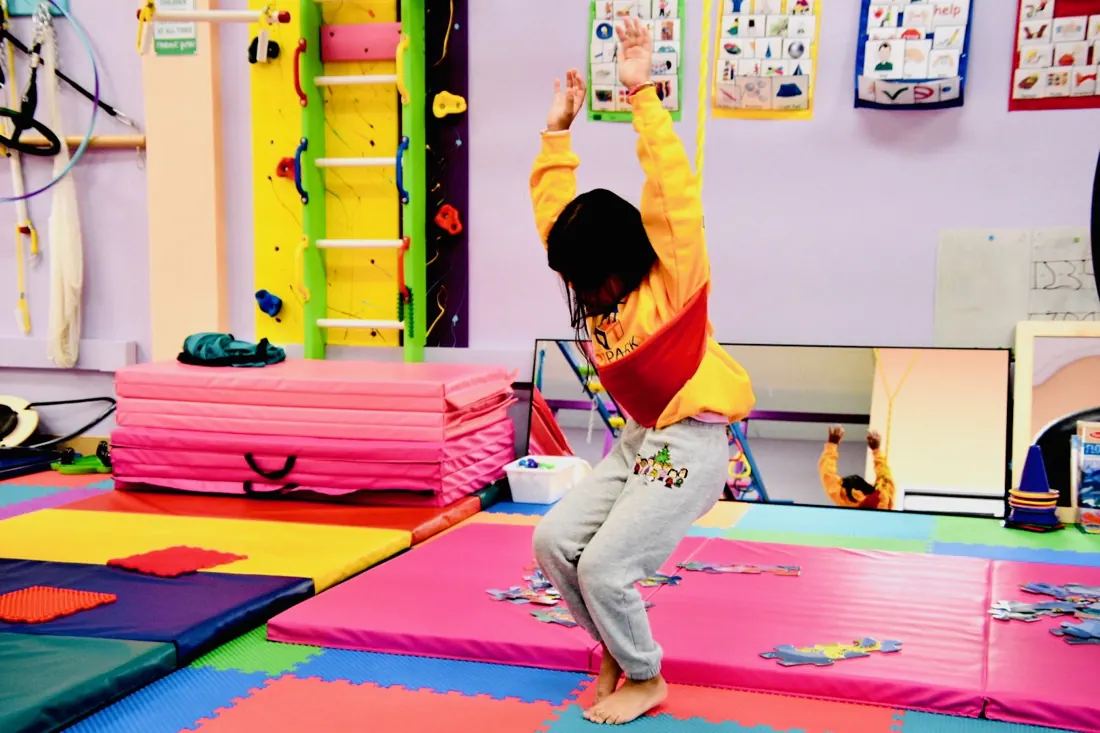
Signs of sensory processing challenges
- Covers ears or melts down with loud or sudden sounds
- Refuses certain clothes, tags, socks or food textures
- Crashes, spins and jumps constantly, or avoids swings and slides
- Seems not to notice pain, mess or their name being called
- Falls apart in busy places such as stores, parties or the classroom
Sensory differences are common in children with autism and ADHD, and they also show up on their own.
Sensory integration at OT Park
A gym built for it
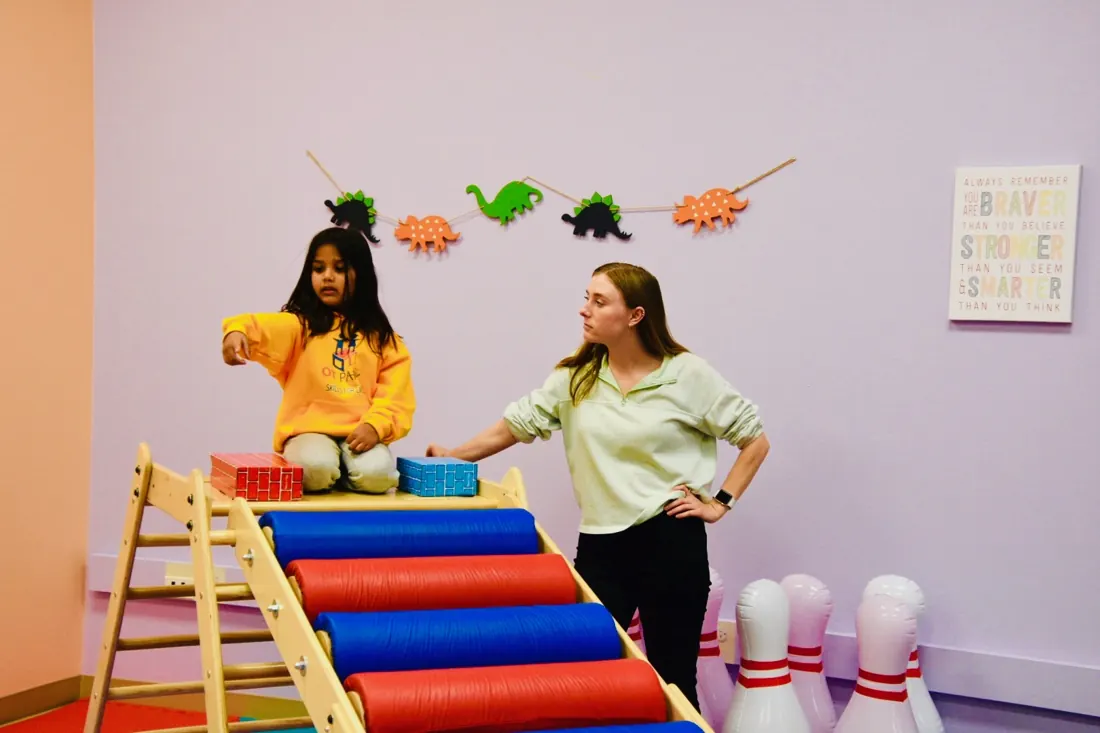
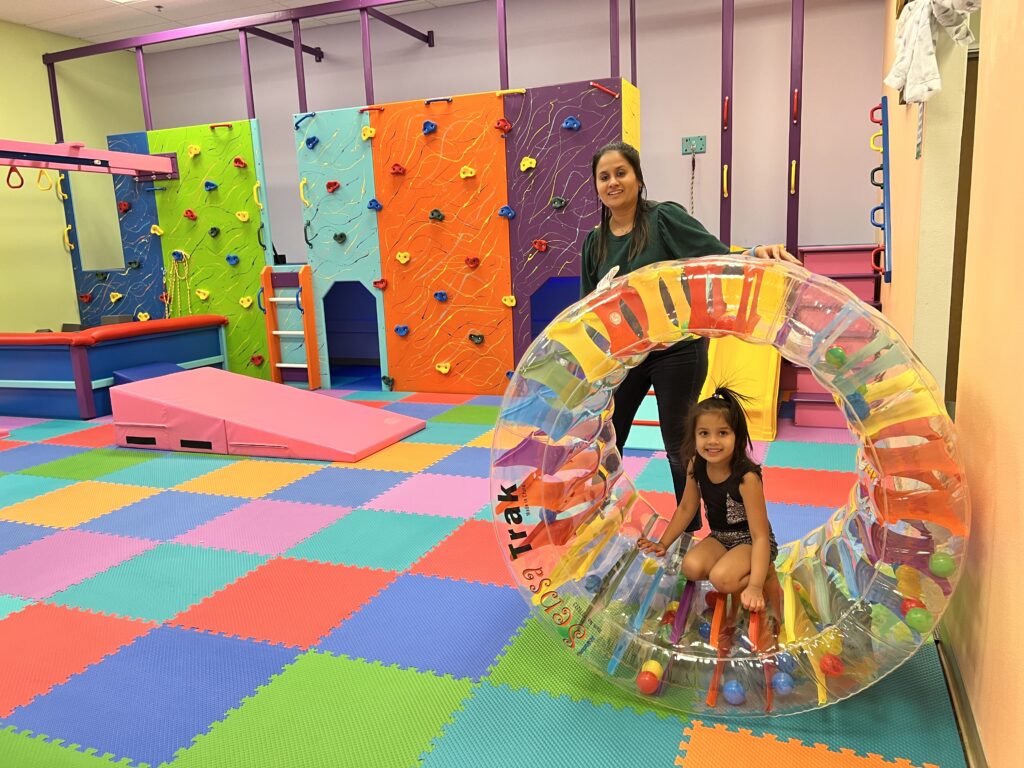
Swings, a ball pit, a foam pit, crash mats and climbing walls give the movement and deep pressure input therapy relies on.
Advanced training
Dr. Hiral Khatri completed the STAR Institute’s sensory integration mentorship, Pro Level 1 and Pro Level 2.
A sensory diet for home
You leave with activities matched to your child, to use before school, after school and at bedtime.
Related: pediatric occupational therapy, sensory social groups, and our articles on sensory integration and sensory diets.
Common questions
Call (669) 888-3636 if yours is not here.
What is sensory processing?
Sensory processing is how the nervous system takes in and responds to sound, touch, movement, taste, smell and sight. Some children are over-responsive and get overwhelmed. Others are under-responsive and seek more input.
What is sensory integration therapy?
It is a play-based occupational therapy approach that uses activities such as swinging, climbing and deep pressure to help a child process sensory input more comfortably.
What is a sensory diet?
A sensory diet is a personalized set of sensory activities spread through the day to help a child stay regulated. An occupational therapist designs it for your child.
How do I know if my child has sensory challenges?
Signs include strong reactions to noise, clothing or food textures, avoiding or constantly seeking movement, frequent meltdowns in busy places and trouble calming down. A screening checks sensory processing directly.
Read more from our therapists
- IEE OT Park Guide to Independent Educational Evaluations (IEE)
 Empowering families. Supporting children. Aligning assessments with meaningful OT-goals. What is IEE? An Independent Educational Evaluation (IEE) is an evaluation conducted by… Read more: IEE OT Park Guide to Independent Educational Evaluations (IEE)
- Feeding Therapy at OT Park: How We Can Help
 Is your child an extremely picky eater? Do they gag, tantrum, or refuse to eat during meals? Do they have trouble swallowing,… Read more: Feeding Therapy at OT Park: How We Can Help
- What are Child’s Occupations? & How OT Park Nurtures Growth Through Play and Therapy
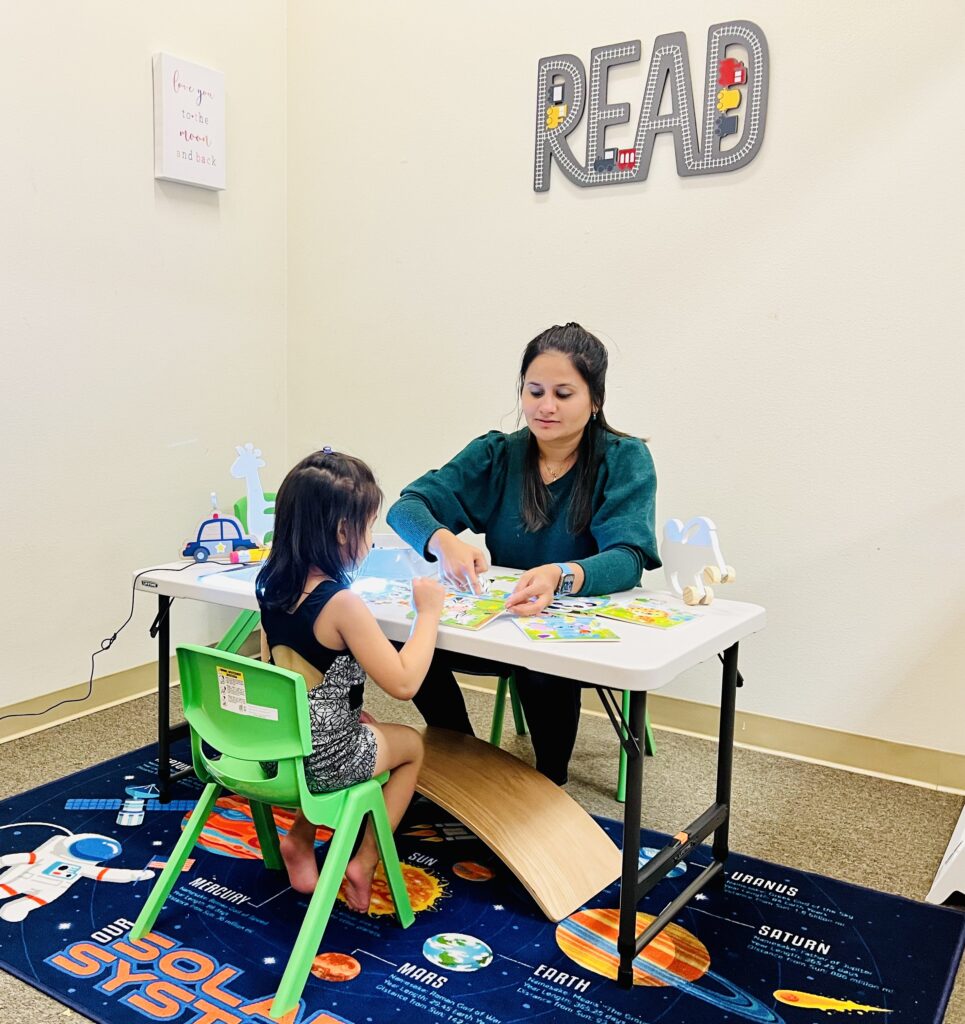 When we think about the term “occupation,” we often associate it with jobs or careers. However, for children, their occupations revolve around… Read more: What are Child’s Occupations? & How OT Park Nurtures Growth Through Play and Therapy
Therapy services at OT Park
Pediatric occupational therapy
Weekly or intensive one-on-one sessions for fine motor skills, sensory processing and the everyday tasks that build independence.
OT groups
Sensory fun, handwriting and social groups. Kids practice alongside other kids, with an OT leading every session.
Speech therapy coaching
Our licensed speech-language pathologist coaches you in real time, so language practice fits into everyday routines at home.
Independent educational evaluation
A second, independent look at your child’s motor, sensory and school-related needs, with a report to bring to the IEP team.
Book a screening
A screening is $75 and by appointment. Your child plays in the gym while you talk with an occupational therapist.